
Off-ramp or Lane Change?: For Many Legacy Resorts, It’s Decision Time
In 2013, I attended an ARDA session on innovative solutions for legacy timeshare resorts. Rich Muller, who at that time led VRI (now part of Capital Resorts), explained how his management company had helped a resort downsize into fewer buildings. It was then a relatively novel concept. Little did I imagine that in 2025, an increasing number of homeowners’ associations at legacy timeshare resorts would be in a similar situation to that resort’s. The question for them: can their resort remain viable in its current form—or does it need to be repurposed or even wound down?
For some associations, repurposing may mean consolidating inventory into a smaller footprint and selling off excess buildings. For others, it may involve transitioning units to whole ownership, rental, or alternative uses. And in certain cases, boards may conclude that a full exit from the timeshare model is the most responsible path forward.
While the outcomes vary widely, industry veterans agree on one point: repurposing decisions are rarely driven by a single metric. They emerge from a convergence of financial stress, operational realities, demographic shifts, and regulatory pressure—and they demand experienced, multidisciplinary guidance.

Senior Vice President of Real Estate Redevelopment
Sustainability First: The Threshold Question
According to Jeff Ingram, Senior Vice President of Real Estate Development at Lemonjuice Solutions, the first and most critical question boards must ask is whether the resort can be financially sustainable over the long term.
“If there is a singularly most important issue,” Ingram says, “it’s whether the property is able to be financially sustainable. Everything else flows from that.”

Sustainability, however, is rarely a static snapshot. Greg Eure, Chief Business Officer at Vacatia, emphasizes the importance of understanding a resort’s trajectory, not just current performance.
“The critical question is not only where a resort stands today, but how those numbers are evolving over time,” Eure explains. “If you have a declining owner base year over year—and that owner base is aging out—you have to assume those trends will continue unless something fundamentally changes.”
Eure also points to the importance of early engagement. “Associations are governed by volunteer boards who typically are balancing many competing responsibilities,” he notes. “Without proactive attention, challenges can compound—economically, operationally, and in terms of owner engagement.”
The Metrics That Matter Most
Across interviews, executives consistently pointed to several key indicators that often signal the need for repurposing discussions:
- Maintenance fee delinquency trends
- Operating margins and reserve inadequacy
- Owner engagement (or lack thereof) and usage patterns
- Seasonality and market relevance
- Physical plant condition and deferred maintenance
“The top metric is velocity of maintenance fee collections and delinquency trends,” Eure says. “If you’re using next year’s maintenance fees to pay this year’s expenses, that’s a sign it’s time to step back and look at a longer-term strategy.”

Joseph Takacs, CEO of TOWB—A Takacs Company, adds that size and scale also play a critical role. “If you’re dealing with a very small resort—20 or 25 units—there’s often just not enough critical mass to support the fixed costs,” he says. “At that point, even strong locations can become financially unstable.”
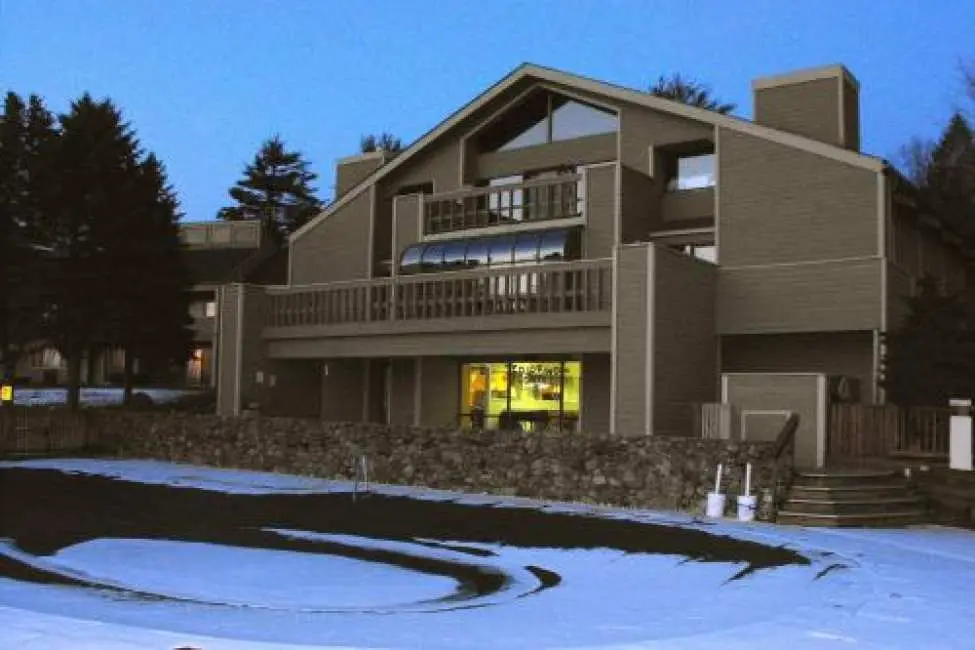
Takacs notes that in several projects MVP has handled, partial downsizing—not wholesale termination—allowed associations to reset their financial footing. “We took one building out of a seven-building resort,” he adds. “That generated millions of dollars for the association and gave the remaining property a chance to stabilize.”
Partial Repurposing and Right-Sizing
Rather than viewing repurposing as an all-or-nothing proposition, many experts advocate for partial solutions—particularly at multi-building resorts.
“Multi-building properties offer more flexibility,” Eure explains. “Boards can work with their advisors to identify specific buildings to transit
on, while preserving the remaining inventory as a healthy, sustainable timeshare association.”
That process, however, requires time and planning. Clearing deeds, relocating owners, and aligning regulatory requirements can take years—not months.
“You can’t wait until you’re out of money,” Eure cautions. “If you’re forced to act quickly, your options narrow dramatically.”
Takacs echoes that view. “When boards come to us early enough, we can look at partial repurposing that actually strengthens the remaining resort,” he says. “When they delay for whatever reason and come too late, the choices become far more limited.”
Legislative and Regulatory Realities
Recent legislative changes have both enabled and constrained repurposing strategies, depending on jurisdiction.
Rich Muller, now Executive Vice President at Capital Vacations, points to Massachusetts as an example of a state adapting to industry realities. “Thanks to legislative changes supported by ARDA, the voting threshold for termination was lowered from 80% to 65%,” Muller says. “That makes the extremely time-consuming and expensive winddown process far more economically feasible and can result is a better financial outcome for the owners, which is the ultimate objective..”
By contrast, other states remain challenging. “California still effectively requires 100% deed recovery,” Muller notes. “That can turn a repurposing effort into a six-to-ten-year process, often consuming most of the net proceeds.”
Ingram stresses that outdated statutes can unintentionally harm owners. “Timeshare laws written in the 1980s couldn’t have anticipated today’s economic and demographic realities,” he says. “In some cases, rigid foreclosure rules make it economically impossible to reposition a property—even when doing so would clearly benefit owners.”
Avoiding the “Wrong Expert” Trap
One of the most consistent warnings across interviews is the danger of engaging advisors without deep, hands-on experience in timeshare repurposing.
“Restructuring is very complex,” Ingram says. “It’s rarely understood by inexperienced people.”
Muller adds that boards often underestimate the transactional intensity involved. “This process requires thousands of owner interactions, legal filings, title reviews, and regulatory steps,” he explains. “It’s not something you can manage without a highly organized team.”
Takacs also cautions against focusing solely on vocal owner factions. “You have to consider the entire ownership base—including defaulted owners,” he says. “Ignoring them doesn’t make the problem go away.”
Determining Highest and Best Use
When converting timeshare inventory to alternative uses, “highest and best use” is not purely theoretical—it is market-driven.
“Ultimately, the market will dictate,” Ingram says. “Properly marketing the potential uses of a property creates demand, and demand determines value.”
Takacs notes that in some cases, reverting a timeshare back to its original residential intent produces the best outcome. “We’ve taken resorts that probably never should have been timeshares and turned them back into whole ownership,” he says. “That was originally the highest and best use and is today as well.”
Still, partial conversions often strike a balance and allow timeshare to continue for those owners that want that. “Downsizing (some of the project) can inject capital into the remaining association while preserving a viable vacation product,” Takacs explains.
Balancing Owner Interests and Transparency
Perhaps the most delicate aspect of repurposing is balancing owner sentiment with fiduciary responsibility.
“If a resort is unsustainable, boards have a fiduciary duty to act in the best interests of all owners,” Ingram says. “Fairness and transparency are paramount.”
Muller agrees, emphasizing communication. “We try to structure win-win outcomes where possible,” he says. “Relocating owners to better accommodations, lowering maintenance fees, or preserving vacation value can go a long way toward building consensus.”
Takacs describes owner reactions as a classic bell curve. “Some owners are relieved and want out immediately,” he says. “Others are deeply emotional while most fall somewhere in between. The key is over-communication and honesty about the financial realities so that each owner, each family can make an informed decision based on what is best for them.”
Looking Ahead: The Next 3–5 Years
All four executives see demand for repurposing and exit strategies continuing to grow.
“Each year, more resorts realize their challenges can’t be solved simply by raising maintenance fees,” Ingram says.
Demographic change is a major driver. “Many legacy owners are aging out, and their children often don’t want the product,” Takacs notes. “That generational shift does not seem to be reversing.”
At the same time, regulatory pressures—particularly around reserves and structural safety—are accelerating decisions. “Deferred maintenance is no longer something boards can postpone indefinitely,” Muller says.
For associations willing to confront reality early, however, experts see opportunity. “When boards work collaboratively with the right partners and give themselves time,” Eure concludes, “there are solutions that preserve value, protect owners, and create a sustainable path forward.”
Judy Kenninger, principal of Kenninger Communications, has been covering the vacation real estate industry for the past two decades.