U.S. Timeshare Industry Shows Resilience in Post-Pandemic Economy
The U.S. vacation ownership industry has demonstrated remarkable resilience in the years following the COVID-19 pandemic, outperforming many traditional lodging sectors while adapting to changing consumer travel preferences.
As travel demand rebounded, timeshare resorts benefited from a unique advantage: a loyal owner base with prepaid vacation products. Industry occupancy levels have remained strong, with timeshare resorts consistently outperforming the broader hotel sector. According to ARDA’s State of the Vacation Timeshare Industry report, occupancy reached approximately 80% in recent years, well above average hotel occupancy rates.
The industry’s recovery has been driven by several factors, including increased interest in domestic travel, greater flexibility through points-based ownership programs, and continued investment by major hospitality brands. Companies such as Marriott Vacations Worldwide, Hilton Grand Vacations, and Travel + Leisure Co. have continued expanding their vacation ownership offerings while modernizing the customer experience.
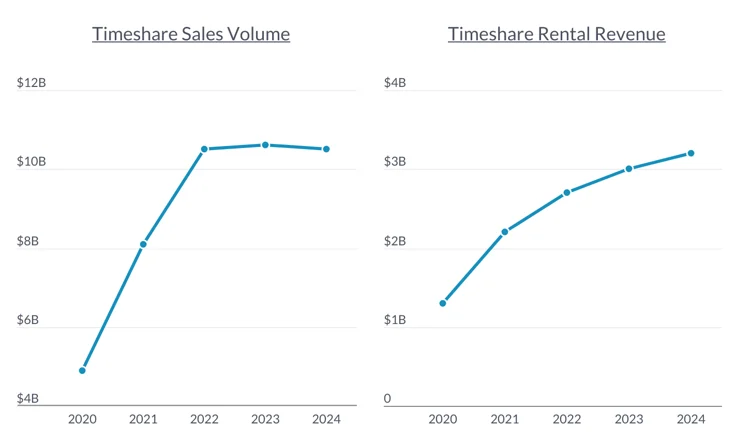
Industry sales have also rebounded significantly from pandemic lows. Recent ARDA research shows annual U.S. timeshare sales exceeding $10 billion, reflecting strong consumer demand for vacation ownership products and experiences. Rental revenue has also grown substantially, providing resorts with additional revenue streams while helping maximize occupancy.
Another notable shift has been the evolution of the traditional timeshare model. Today’s vacation ownership products increasingly emphasize flexibility, allowing owners to use points across multiple destinations, accommodations, and travel experiences rather than being tied to a single resort or fixed week. Industry observers say these changes have helped attract younger buyers and improve consumer perceptions of vacation ownership.
Despite ongoing economic challenges, including higher interest rates and inflationary pressures, analysts continue to view the sector as relatively resilient. The prepaid nature of vacation ownership contributes to stable occupancy and recurring revenue streams, helping many resorts navigate economic uncertainty more effectively than other lodging segments.
Looking ahead, industry leaders expect continued demand for leisure travel, with technology enhancements, flexible ownership structures, and strong owner satisfaction helping support long-term growth across the vacation ownership sector.
Source: This article was adapted from reporting originally published by The Mercury and incorporates industry data from ARDA’s State of the Vacation Timeshare Industry reports and related industry research. Original article: “How Has the U.S. Timeshare Industry Fared in the Post-Pandemic Economy?” published by The Mercury.